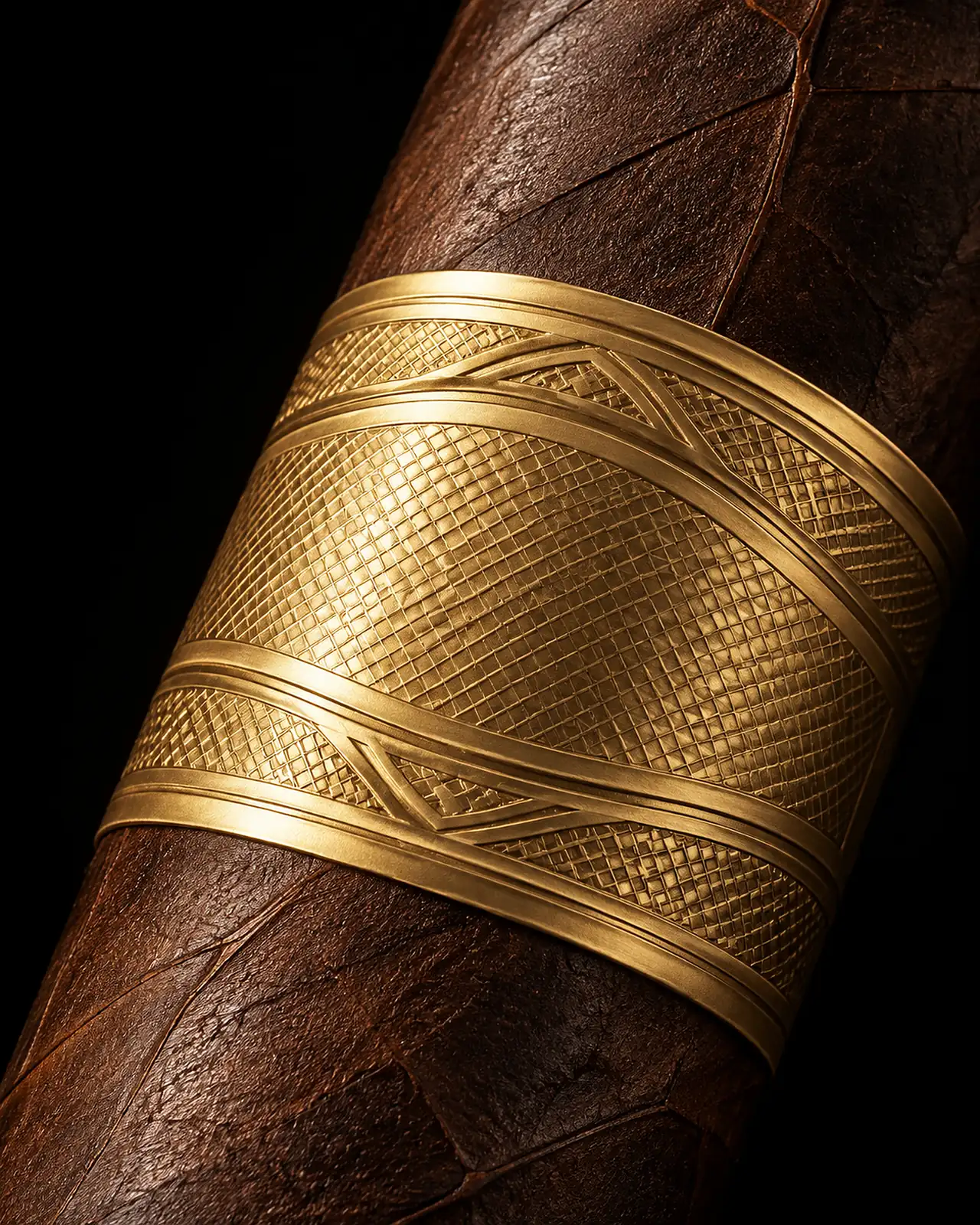
There is a persistent idea that the wrapper carries most of the flavour. It is repeated often enough to sound like fact. In practice the wrapper is a minority of the leaf by weight, and its job is closer to a frame than a painting.
What the wrapper is genuinely good for is reading the maker.
What to look at
Not the colour. Colour varies by priming position and by the light in the room you are standing in.
Look at these instead:
- Tension. Run a thumb along the length. A well-made cigar is firm without being hard, and the firmness is even. Soft spots near the head mean the bunch is loose there, and the draw will open up halfway through.
- Veins. One or two fine veins are normal. A raised, webbed vein pattern usually means a thicker leaf was selected for appearance rather than behaviour.
- The cap. This is the tell. A cleanly applied cap — flush, no lifting edge — is the mark of someone who finishes what they start.
- The seam. Hold it to a light and rotate it. You should struggle to find the line.
What not to over-read
Oily sheen, tooth, fine grain — these are often presented as guarantees of quality. They correlate loosely with leaf character and not at all with construction. A cigar can look superb and draw like a blocked pipe.
This is why the house does not publish a tasting vocabulary on this site. A descriptive note is someone else's palate. The seam and the cap are yours to check.
A note for buyers
If you are assessing a shipment, cut one cigar open. Not to smoke — to look. The bunch should be even along the length, the filler leaves laid with intent rather than packed. It takes ninety seconds and tells you more than the box did.
That is the whole method. Look at what the maker could not fake.