Every account of cigar making spends its time at the bench. The leaf is laid out, the bunch is formed, the wrapper is drawn tight, and the camera stays there because the hands are beautiful. It is the most photographable moment in the process and the least decisive one.
What decides the smoke is what happens after the roller puts the cigar down.
What rest actually gives you
A freshly rolled cigar is a wet object. The leaf still holds the moisture that made it workable. Draw it in that state and you get steam, ammonia, and a heat that flattens everything the blend was built to do.
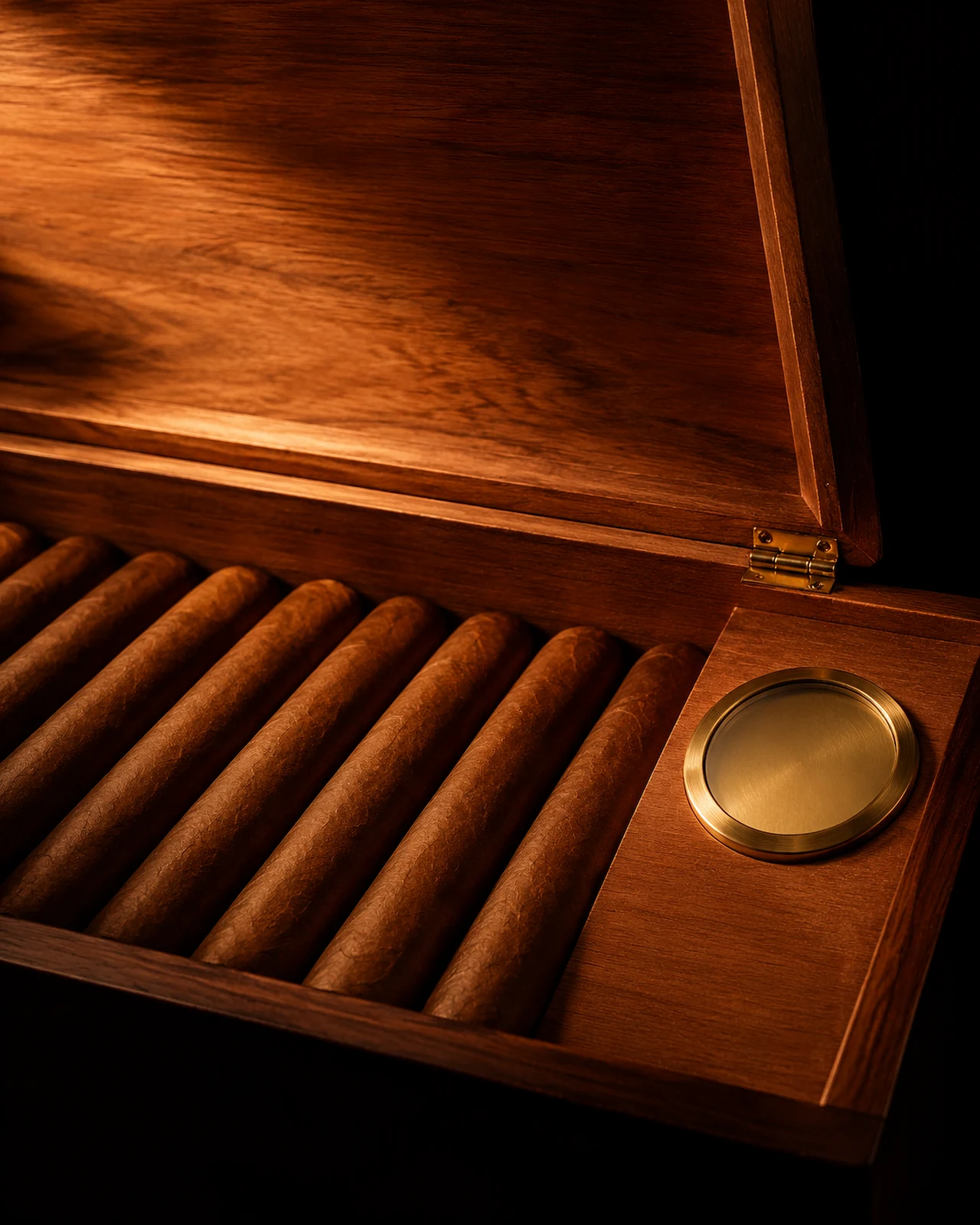
Rest is not a pause in production. It is the part of production where the tobacco finishes becoming itself — where the oils settle, the harshness lifts, and the separate leaves stop arguing and start agreeing.
Why we do not shorten it
There is commercial pressure to shorten rest, and it is easy to understand: stock that sits is stock that is not moving. We resist it for an unglamorous reason. A cigar released early does not fail loudly. It simply tastes like an unfinished thought, and the person who notices is the one who bought it.
So the interval is measured in seasons rather than weeks, and no order changes that. A trade partner asking for earlier delivery is asking us to send something we would not smoke ourselves.
What this means in practice
If you carry the house, plan for it. The interval between request and delivery is not friction in our process; it is the process. We would rather say no to a date than yes to a cigar that has not finished.
That is the whole of it. The photogenic part is short. The quiet part is the product.